 Frank Deford, fresh off his appearance at Book Expo yesterday, gets some attention from The Wall Street Journal: "Did we just say "Mr. McEnroe"? Apologies to Frank Deford. The veteran sportswriter recently needled the Journal for using the courtesy titles Mr. and Ms. in its sports pages. "There are no misters in sport," he said, noting that well-known figures in the sports world nowadays are even referred to by their first names or nicknames, like Kobe and A-Rod. Point taken, Frankie D.! We'll keep that in mind while discussing your novel "Bliss, Remembered" (Overlook, July). Good old Deford Fairlane takes his readers back to the 1936 Berlin Olympics in this tale of a young woman named Sydney Stringfellow, an American swimmer who falls in love with a German at the Games, but the romance that doesn't survive the politics of the day. The Defordable One has devised the story as Sydney's late-in-life memories of the affair, of her eventual marriage to an American and her lingering affection for her German lover. The author knows plenty about the Berlin Games, having written a classic Sports Illustrated piece in 1986 about filmmaker Leni Riefenstahl on the 50th anniversary of the Olympics she immortalized at Hitler's behest. Much Defordian work over the years, in fact, now constitutes for readers a sort of bliss remembered. Here's hoping El Franko has done it again. El Franko? Frankie D.? The Defordable One? Oh, WSJ-by-Murdoch, so playful."

Friday, May 28, 2010
Frank Deford and BLISS, REMEMBERED in The Wall Street Journal
Frank Deford, fresh off his appearance at Book Expo yesterday, gets some attention from The Wall Street Journal: "Did we just say "Mr. McEnroe"? Apologies to Frank Deford. The veteran sportswriter recently needled the Journal for using the courtesy titles Mr. and Ms. in its sports pages. "There are no misters in sport," he said, noting that well-known figures in the sports world nowadays are even referred to by their first names or nicknames, like Kobe and A-Rod. Point taken, Frankie D.! We'll keep that in mind while discussing your novel "Bliss, Remembered" (Overlook, July). Good old Deford Fairlane takes his readers back to the 1936 Berlin Olympics in this tale of a young woman named Sydney Stringfellow, an American swimmer who falls in love with a German at the Games, but the romance that doesn't survive the politics of the day. The Defordable One has devised the story as Sydney's late-in-life memories of the affair, of her eventual marriage to an American and her lingering affection for her German lover. The author knows plenty about the Berlin Games, having written a classic Sports Illustrated piece in 1986 about filmmaker Leni Riefenstahl on the 50th anniversary of the Olympics she immortalized at Hitler's behest. Much Defordian work over the years, in fact, now constitutes for readers a sort of bliss remembered. Here's hoping El Franko has done it again. El Franko? Frankie D.? The Defordable One? Oh, WSJ-by-Murdoch, so playful."

Harry Crews + Joan Didion = Katie Arnoldi?
 Jeff Baker of The Orgeonian in Portland profiles Katie Arnoldi: "Katie Arnoldi really wanted to see a mountain lion. That's how one seed for her new novel Point Dume was planted.
Several of her friends in Malibu, Calif., had too-close encounters with the big cats, and Arnoldi -- who loves to hike off-trail in Sequoia and Kings Canyon National Parks -- became obsessed with seeing a mountain lion. She would get up before dawn and head into the Santa Monica Mountains, hoping to catch up to a cougar on the prowl.
One morning, she ran into some scary-looking guys in full camouflage who glared at her and didn't say anything. The encounter was scarier than any wildlife sighting and made more sense as she got deeper into her research and learned about how illegal marijuana growing operations are everywhere, from the deep forests of Sequoia and Kings Canyon -- where Arnoldi befriended a Forest Service official and gained access to law enforcement operations that are trying to stop pot farming on public land -- to the hills above Malibu.
"It's everywhere," Arnoldi said last week during a visit to Portland. "There can be huge 100,000-acre sites way back in the woods or smaller ones that you can walk to from a parking lot."
Like much of the U.S., Oregon is overrun with outlaw pot growing operations, many of them controlled by Mexican drug cartels. The cartels often force illegal immigrants who don't speak English and don't know where they are to cultivate the plants and will threaten to kill their families if they leave. Arnoldi explored this end of the drug business in Point Dume and agrees that Americans who smoke pot don't think about the violence associated with it or the environmental devastation caused by all the illegal pot farming.
View full size"And the third thing I would add is all the toxins they use when they're cultivating it," she said. "Nobody talks about that. It's terrible."
Marijuana cultivation is only one element in Point Dume. Arnoldi grew up surfing at Malibu and now lives on a hilltop there with her husband, painter Charles Arnoldi. Surf culture has changed, and not for the better, and a theme of invasive species runs through her book. It is her third novel, after "Chemical Pink" and "The Wentworths," and she cheerfully recapped her life and writing career.
Arnoldi was dyslexic as a child but didn't know it and struggled to read. She married her husband, already a successful artist, when she was 23 and began writing short stories that were routinely rejected.
"I was so self-centered and narcissistic when I was in my 20s, and my work reflected it," she said. "When my daughter was born in 1990, I swore I'd never write another sentence. I began training as a bodybuilder and two years later I won the Southern California bodybuilding championship."
Arnoldi wouldn't take steroids, which limited her future as a bodybuilder, and she gave it up. She did some competitive surfing "longboarding, mostly, anything to distract myself." She wrote what became a chapter of Chemical Pink, her first successful piece of fiction and not coincidentally the first thing she wasn't in as a character. The novel was a success and was optioned as a movie, and she spent a couple of years writing the screenplay. She said her writing idols are Harry Crews and Joan Didion."
Tuesday, May 25, 2010
Meet The Overlook Press at BOOK EXPO AMERICA 2010!
 Book Expo America 2010! The annual gathering of booksellers, publishers, authors, agents, and other assorted book biz folk
The Overlook Press, headed by publisher Peter Mayer, will be at Booth #3552. Three Overlook authors: Peter Quinn, Frank Deford, and P.F. Kluge, will be the Autographing Area on Wed/Thurs signing advance reading copies of their new novels. So if you're in New York and attending BEA, please come by and say hello to the Overlook staff, pick up our new catalogue, and enter our special Collector's Wodehouse and Nonesuch Dickens drawings!
We will showcasing our new titles coming this Fall, which include new novels from Overlook favorites Penny Vincenzi, P.F. Kluge, and Susan Hill; a major biography of the esteemed British architect Norman Foster; the newly discovered masterpiece by the late Andre Schwartz-Bart; and landmark memoir of the pioneering curator of MOMA, William Rubin. On the lighter side we have the uproarious Let's Have a Bite! by Bob Forbes and Ronald Searle and The Book of English Magic.
Monday, May 24, 2010
Meet Peter Quinn, Author of THE MAN WHO NEVER RETURNED, at Book Expo America on May 26
 Attention BEA Attendees! Peter Quinn, author of the forthcoming novel The Man Who Never Returned, will autograph advance reading copies on Wednesday, May 26, 1pm, at the BEA Autographing Area, Table 9.
Novelist, political historian, and foremost chronicler of New York City, Peter Quinn is the author of Banished Children of Eve, Hour of the Cat, and a collection of essays, Looking for Jimmy: In Search of Irish America.
Quinn co-wrote the script for the 1987 television documentary “McSorley’s New York,” which was awarded a New York-area Emmy for “Outstanding Historical Programming.” He has participated as a guest commentator in several PBS documentaries, including “The Irish in America;” “New York: A Documentary Film;” “The Life and Times of Stephen Foster,” as well as the Academy Award-nominated film, “The Passion of Sister Rose.” He was an advisor on Martin Scorcese’s film “Gangs of New York.” He helped conceive and script the six-part documentary “The Road to the White House,” which aired on TG4, in Ireland, in 2009.
Along with his book writing, Quinn was the editor of The Recorder: The Journal of the American Irish Historical Society from 1986 to 1993. He has published articles and reviews in The New York Times, Commonweal, America, American Heritage, The Catholic Historical Review, The Philadelphia Enquirer, The L.A. Times, Eiré-Ireland, and in numerous other newspapers and journals. At present, Quinn is on the advisory boards of the American Irish Historical Society, NYU’s Glucksman Ireland House, the Tenement Museum and the New York City Landmark Conservancy.
In 1979, Quinn was appointed to the staff of Governor Hugh Carey as chief speechwriter. He continued in that role under Governor Mario Cuomo, helping craft the Governor’s 1984 Democratic Convention speech and his address on religion and politics at Notre Dame University.
Peter Quinn joined Time Inc. as the chief speechwriter in 1985 and retired as corporate editorial director for Time Warner at the end of 2007. He received a B.A. from Manhattan College in 1969, an M.A. in history from Fordham University in 1974 and completed all the requirements for a doctorate except the dissertation. He was awarded a Ph.D., honoris causa, by Manhattan College in 2002.
LADY GAGA: BEHIND THE FAME Reviewed in Orlando Sentinel
 Emily Herbert's portrait of a lady is reviewed by music critic Jim Abbott in the Orlando Sentinel: "Lady Gaga: Behind the Fame, a breathless new biography by Emily Herbert ($14.95, The Overlook Press). Just a little more than a year into international stardom, Gaga and her career aren't exactly ripe for analysis. But, hey, analysis is boring. Especially when there are pages devoted to the controversy about whether the singer is a hermaphrodite. She's not, the author concludes. Other passages expound reverently on the singer's sense of style and the attention to detail involved in her image and performances."
Lady Gaga: Behind the Fame, available in paperback, is filled with color photos documenting Gaga from her gogo dancer days to the release of her second album, The Fame Monster, Lady Gaga is an essential source for anyone wanting to get the behind the scenes scoop on this fascinating performer. Both an inspiring story of self-actualization and a comment on today’s celebrity obsessed culture, Gaga’s tale, whether she’s beloved or reviled, is one of pop history in the making.
Friday, May 21, 2010
Starred Review in PW for Frank Deford's BLISS, REMEMBERED
 Publishers Weekly gives a starry preview to Bliss, Remembered by Frank Deford: " When American swimmer Sydney Stringfellow arrives at the 1936 Berlin Olympics, she never expects to fall in love with a handsome young German, but she does. When politics separate them, she goes home to nurse her broken heart and meets Jimmy, a kind young American who restores her faith in love and marries her before being shipped off to the Pacific theater of WWII. When Horst shows up on her doorstep, though, Sydney is torn and must decide what she is willing to do for love. Told as a memoir, Deford's newest is entertaining and thought provoking. He has a superb sense of character and period, and readers will at once feel drawn into the turbulent times. The memoir device, while overused in many books, is put to excellent effect, allowing readers to easily identify with Sydney's son and interviewer, Teddy. The surprising twist will catch readers off guard but not leave them feeling cheated. This is a poignant story, utterly charming and enjoyable."
Thursday, May 20, 2010
Meet Overlook Authors Peter Quinn, Frank Deford, and P.F. Kluge at Book Expo America
 Book Expo America is just around the corner, and we are thrilled to have a trio of novelists joining us for the festivities: Peter Quinn, Frank Deford, and P.F. Kluge. All will be be autographing galley copies of their new books at the Autographing Sessions area, as well as meeting booksellers at The Overlook Press booth (#3552).
Norman Zollinger's RIDERS TO CIBOLA: "An Extraordinary American Story"
 Overlook's new paperback edition of Norman Zollinger's classic western, Riders to Cibola, is drawing attention from a new generation of readers.
"After quitting a corporate job and moving his family to Albuquerque to become a writer in 1970, Norman Zollinger had little way of knowing that he would soon produce one of the century's top Western novels. Riders to Cibola is the story of Ignacio Cruz, a Mexican orphan, who finds a place in the West in the early 20th century, despite historical turmoil and personal struggles. Originally published in 1977 Zollinger's portrayal of New Mexico remains beautiful and entrancing. -American Cowboy Magazine
"This novel is a sweeping family saga that begins in 1905 when fifteen-year old Ignacio Ortiz, a Mexican orphan, joins Douglas MacAndrew’s D Cross A ranch in New Mexico. As seen through the eyes of Ortiz, the family is faced with Mexican revolutionaries, two world wars, western expansion and racism. Each generation of the MacAndrew family must deal with internal turmoil among its members, while Ortiz becomes a stable influence because of his quiet, faithful demeanor. Named as one of the top 21 western novels of the 20th century, this is a vivid account of life on a ranch in New Mexico during these turbulent times. Mr. Zollinger’s descriptions of the vast western landscape are breathtaking, his characters are interesting and well drawn out, and the evolving story, with its various twists and turns in plot, is exceptional. Ignacio Ortiz, although he had very little dialog, is a character I will never forget. This is truly an extraordinary American story, even if you’ve never read a Western novel before. If you are a fan of Larry McMurtry and his stories of the West, you will love this book." - Historical Novels Review
Wednesday, May 19, 2010
Coming Soon: Ed O'Loughlin's NOT UNTRUE & NOT UNKIND
 Coming next month is Ed O'Loughlin's acclaimed debut novel Not Untrue & Not Unkind.
 Longlisted for the Man Booker Prize in 2009, Not Untrue & Not Unkind is a gripping tale of friendship, rivalry, and betrayal among a group of journalists and photographers covering war-torn Africa in the 1990s.
In stirring prose, Ed O’Loughlin offers a graceful and emotional account of the lives and loves of a group of young, but world-weary, journalists. Set against the backdrop of African war and politics, Not True & Not Unkind is a searing novel that ultimately explores the meaningfulness of modern-day relationships and the personal struggle for connection and community.
Early Praise for Not Untrue & Not Unkind:
“Fantastic writing, great subject; a voice that is both passionate and cold. The most exciting first novel I have read in many years.”—Anne Enright, Booker Prize-winning author of The Gathering
“A fine, darkly authoritative novel.” —Joseph O'Neill
“It’s a dark and expertly told soap opera… an astonishingly powerful and accomplished debut novel written with great authority… This atmospheric book authentically carries the sounds and flavors of a Graham Greene novel, reading at times like a memoir with the seamless underbelly of a gritty Hemingwayesque tale… Buy, steal, or borrow this book. Whatever you do, read it.” -- Sam Millar, New York Journal of Books
“One of the most powerful debut Irish novels of the last decade.” —Sunday Business Post
“Passionate, colorful ... love story and tragedy, mystery and professional satire (à la Evelyn Waugh's Scoop) all rolled into one.” —Irish Times
“O’Loughlin makes readers see the storytellers as they describe the unimaginable.” - ForeWord Magazine
Tuesday, May 18, 2010
Q &A with Ben Farmer, author of EVANGELINE, on Bookreporter.com
 Ben Farmer, whose debut novel Evangeline has just been published, takes a few questions from Bookreporter.com:
"Inspired by Henry Wadsworth Longfellow’s epic poem of the same name, Ben Farmer’s Evangeline chronicles a young woman’s decade-long search for her fiancé, from whom she was separated during the Acadian exodus in 1755 from present-day Nova Scotia to Louisiana. In this interview with Bookreporter.com’s Eileen Zimmerman Nicol, Farmer explains what he finds appealing about Longfellow’s poem, and discusses the challenges he faced in taking liberties with the narrative without conflicting with his source material, as well as with historical fact. He also elaborates on the strengths and weaknesses of his main characters, describes his lengthy and painstaking editing process, and shares details about the two novels he’s currently working on."
Bookreporter.com: At the opening of the book, Evangeline carefully avoids situations where she might be swept away by her passion for Gabriel, preferring to wait until they are married. How did you investigate the mores of the times?
Ben Farmer: The Acadians frowned on kissing, so even Evangeline and Gabriel’s restrained scene in the orchard contains some adventurous moments for Grand Pré. The Acadians’ scruples are meant to be contrasted by the callous behavior depicted throughout much of the sparsely settled frontiers of the New World. Most of the Acadians wind up settling north and south of New Orleans, but my narrative carried Gabriel and his companions through New Orleans to show the diversity of settlement these people might have been exposed to. My research began in contemporary nonfiction, but as I wrote, I found myself increasingly relying on sources from or nearly from the first half of the 18th century, and I found myself impressed more by the pragmatism than the prudishness.
BRC: You mention in the acknowledgments that the project took longer than you anticipated. Why?
BF: Editing Evangeline, which I describe below, took a while longer than anticipated. It was about a year and a half before I had a working draft, and about that long again to refine it. It was impossible to prepare for how difficult it would become to declare Evangeline finished and ready for the printer. Overlook kindly allowed me to continue working my way through drafts until I was closer to satisfied.
BRC: After Evangeline and Gabriel, Felican, the priest who becomes Evangeline’s guardian, and Bernard, the trapper who accompanies them down south to search for Gabriel, are the two most fleshed-out characters. Were they real people, or did you make them up? What purpose do you feel they serve in the narrative?
BF: Felician is a character in Longfellow’s poem. Bernard is my creation. They are Evangeline’s reluctant guardians, and the scenes that revolve around them hopefully advance the readers’ understanding of Evangeline from perspectives other than her own, while creating characters deep enough to have their own desires and designs on the novel. They don’t serve a single purpose in the novel, but considering them as a single entity, Felician and Bernard are further evidence of men not getting what they want from Evangeline.
BRC: From the start, Evangeline is headstrong and determined, not letting people’s opinions of her stop her from her dream of finding Gabriel. She spends a lot of time fending off the unwanted advances of various men she meets, from strangers to companions. How does this add to the view we have of her?
BF: When thinking about what might propel a person across years in search of a love she has yet to know, I imagined that such a journey would require a character with a great deal of self-confidence, physical courage, and one who is intellectually and emotionally independent.
Evangeline is beautiful, and this --- like her confidence, loyalty, and self-awareness --- changes somewhat in its expression, perhaps, but is largely undiminished by age or deprivation in exile. This is another factor in her continued isolation from her Acadian contemporaries.
BRC: How does Gabriel change from the beginning of the novel to the end? Do you see him as a victim of circumstance?
BF: I hope Gabriel’s character remains consistent in several ways throughout the novel: he shies from taking control, he prefers to leave the burden of decision with his father, and then, when it becomes his own, he believes that he acts poorly. Gabriel is a reluctant and unconfident adult, who finds himself withdrawing to a solitary existence in the swamp, despite his marriage to Anna in the latter stages of the novel. This, as is the case with most of the major events of Gabriel’s life, is suggested by another, Anna. Gabriel marries her reluctantly, guilted into sheltering his child under the public assumption that it is his dead best friend’s. Still, Gabriel is not merely a victim of circumstance. There are examples --- in Evangeline, Philippe, and Alexander --- of those who sculpt better lives out of equally difficult conditions.
BRC: Did you ever feel constrained by historical facts when you were writing this tale? Or did you feel free to elaborate or perhaps even prevaricate?
BF: As I said above, I tried to write a novel that didn’t disagree with either poem or my sense of recorded history, with the fiction confining itself to the narrow strip of overlap between. I did feel free to prevaricate, and did so consciously at least one time. The Young Men dried up in New France around the beginning of the 18th century, but I wanted to include them as a contrast to teeming New England militia, as representative of the difference in how England and France controlled their North American colonies.
BRC: Your story spans 13 years. How did you decide which events to bring to life? Tell us about the challenges of holding a reader’s interest throughout such a long passage of time.
BF: This was difficult. In Evangeline and Gabriel, I have two characters who want pretty much the same thing for a long time. I was challenged to find new ways to express this without becoming repetitive or overly systematic. I began my writing thinking, ‘What can I include?’ (both in terms of events in the lives of my characters and events in history that might shape some of their decisions) and by the end of the editing process instead thought, What do I need to include? Ultimately, I felt that much of what I wanted to include muddied rather than illuminated my characters. By this I mean to say that in a novel, it is often the way a character does something once often becomes more than a sum of their actions in terms of expressing their personality. If Evangeline was placed in a situation that might remind her of Gabriel, and she instead thinks of someone else, or moves on without reflection, then that scene might show more about her character than if I mentioned that she missed Gabriel. Which I do plenty.
BRC: What virtues was Longfellow celebrating in his poem? Are they different from the ones you chose to emphasize? If so, why?
BF: The piousness of Evangeline and her embodiment of the consistency of women are often mentioned as virtues Longfellow was celebrating in his poem. I didn’t create an Evangeline with the sense of propriety evident in Longfellow’s poem, as this disagreed with my notion of the sort of personality well-suited to traversing the colonial frontier. I did keep Evangeline involved with the church in Grand Pré, and though propriety and piety are often seen as related behaviors, I tried to separate them in her.
Longfellow extolled the peace and prosperity of a peasant life, and echoes of this might be seen in Basil, and others of my characters who avoid towns for fear of the turmoil those more densely settled areas bring. I find in both poem and novel an appreciation of unwavering individual scruples in the face of tyrannical and unsympathetic behavior on the part of bureaucratic empires.
BRC: Were you tempted to “update” the tale for modern readers? If you feel you did, what parts are examples of this? Was it hard to work with material over 200 years old?
BF: It took a certain liberty in writing a book in English about French speakers. Here, I was fortunate that both the original telling of the tale I use as the backbone for my novel, Longfellow’s Evangeline, and prominent retellings, including Voorhies’ ACADIAN REMINISCES, are also in English. I suspect the French embarrassment over having supplied little assistance to the Acadians (prior and subsequent to their deportation) resulted in light treatment of the Acadians both in French historical records and in the fiction of a people poised on the brink of a national pride movement. Of course, that is an opinion. Easier to prove is that the English suppressed their documentation of the massive deportation, which would have required a mountain of paperwork, detailing ships and men that were used to remove thousands from their homes.
I believe the rhythm of the dialogue is not period appropriate --- though the vocabulary is --- and this was a conscious concession to the modern audience that I hope to interest. I would say I attempted to have the characters speak a bit more casually, which I hoped allowed a contemporary reader more clarity regarding the characters’ wants and personalities.
BRC: What’s next for you as a novelist. Do you want to continue writing historical fiction?
BF: I have plans for my next two books, the first of which I might call historical fiction (though I would not refer to EVANGELINE as such) and the latter of which is a work of fiction in a contemporary setting. RIEL takes place late in the 19th century and revolves around the leader of the Northwest Rebellion. So I hope to write novels set in the past as well as novels set in contemporary times.
Monday, May 17, 2010
Katie Arnoldi on Tour for POINT DUME
 Novelist Katie Arnoldi is on the on the road this week with events in San Francisco, San Mateo, Portland, and Malibu. Arnoldi is the author of three critically acclaimed books, including the newly published Point Dume. Come out and meet Katie at these upcoming readings!
5/18
Booksmith, 7:30pm
1644 Haight Street
San Francisco
5/19
M is for Mystery, 7:00pm.
86 East 3rd Avenue
San Mateo, CA
5/20
Powell’s Books, 7:30pm
1005 West Burnside Street
Portland, OR
5/22
Diesel Books, 3:00pm
3890 Cross Creek Rd
Malibu, CA
Portland, OR
5/22
Diesel Books, 3:00pm
3890 Cross Creek Rd
Malibu, CA
Justin Allen's YEAR OF THE HORSE Wins Independent Publisher Book Award
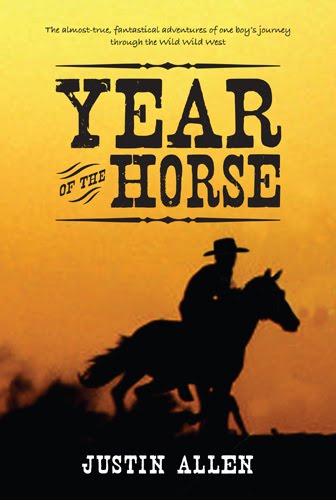 Justin Allen's adventure novel Year of the Horse has been awarded the Silver Medal as the second best Independent Book in the West/Mountain Region for 2010!
The "IPPY" Awards, launched in 1996, are designed to bring increased recognition to the deserving but often unsung titles published by independent authors and publishers. Established as the first awards program open exclusively to independents, over 2,000 "IPPYs" have been awarded to authors and publishers around the world.
Year of the Horse tells the story of Yen Tzu-lu, a child of Chinese immigrants unwillingly pressed into service by a gang of roughnecks bent on stealing a gold mine from a shadowy villain deep in the western wilderness. With Tzu-lu as our guide, we experience a landscape of legend, stand toe-to-toe with those larger-than-life heroes and villains of our shared American mythos, and learn the inescapable facts that have both enriched and plagued our nation from its inception. Resonating with echoes of Mark Twain, Larry McMurtry, and J. K. Rowling, this is a book of fabulous adventure and deep resonance. Justin Allen gives readers a picture of how America sees itself, and in so doing he offers up both a heroic vision of the past and hope for the future.
Friday, May 14, 2010
Wodehouse for the Weekend!
 Our beloved Collector's Wodehouse series continues to delight PGW fans all over the world. The series continues to grow with five new titles to be published by the end of 2010. Coming soon are Service with a Smile and The Pothunters, followed later in the year by A Pelican at Blandings, A Prefect's Uncle, and Eggs, Beans and Crumpets.
These Wodehouse works offer almost everything a reader could ask for: sharply drawn characters, intriguing stories, and exquisite prose. Each volume has been reset and printed on Scottish cream-wove, acid free paper, sewn and bound in cloth. They are elegant and essential additions to any Wodehouse fan's library. They are brilliant gifts for friends or family, or simply to indulge oneself!
"His novels are the very definition of British humor, bubblingly witty and dryly loony. Overlook Press continues its reissue of a handful of these absurd souffls. You can buy the work for yourself in suave hardcover volumes, the dust jackets as natty as the prose." Entertainment Weekly
"When Overlook Press repackaged a line of titles by the British humorist P.G. Wodehouse, the house devoted great attention to producing high-quality editions of the bookswhich feature full cloth covers and beautiful, striped endpapers." -Publishers Weekly
P.G. Wodehouse (1881-1975) was born in Surrey, educated in London, and spent much of his life in Southampton, Long Island, becoming an American citizen in 1955. In a literary career spanning more than seventy years, he published more than ninety books, twenty film scripts, and collaborated on more than thirty plays and musical comedies.
Thursday, May 13, 2010
Starred Review in PW for Peter Quinn's THE MAN WHO NEVER RETURNED
 Peter Quinn's forthcoming novel The Man Who Never Returned gets a star from Publishers Weekly: "Quinn delivers a satisfying solution to the real-life mystery of Joseph Crater, a New York City judge who disappeared in 1930, in this stellar hard-boiled historical novel, a sequel to Hour of the Cat (2005). In 1955, a New York newspaper magnate offers PI Fintan Dunne carte blanche to investigate the case in the hope that Dunne will provide him with a sensational exclusive. Crater vanished just as an official inquiry into judicial corruption, ordered by then governor Franklin Delano Roosevelt, was getting underway. Perhaps Crater fled to avoid prosecution—or someone bumped him off because he knew too much. Restless in retirement, Dunne accepts the offer, despite his skepticism that such a cold trail can be meaningfully pursued. Quinn not only makes the existence of clues at such a late date plausible but also concocts an explanation that’s both logical and surprising. The depth and complexity of the lead character is a big plus."
Meet David Carkeet and Laura Joh Rowland at BookHampton's Mystery Mayhem May 15-16
 Our friends at BookHampton out on Long Island are hosting a Mystery Mayhem Festival this weekend featuring top mystery writers participating in readings and talks.
Laura Joh Rowland, author of Bedlam: The Further Adventures of Charlotte Bronte, will appear at three events: May 15, 1pm, at the East Hampton store, and May 16, 1pm in Sag Harbor, and 3pm at the Southampton store. David Carkeet, author of From Away and Double Negative, will also be in East Hampton on May 15 at 1pm and May 16, 11am. Don't miss this great weekend of mystery and mayhem in the Hamptons!
Wednesday, May 12, 2010
More Praise for Jim Nisbet's WINDWARD PASSAGE
 Jim Nisbet's Windward Passage gets a stellar review in Booklist: "Nisbet, whose cult appeal has never really translated to the mainstream, hits another one out of the park. It's a typically skewed story, one that requires the reader to pay attention, follow intricate plot threads, and-most importantly-get comfortable in the author's landscape with (let's face it) very little help from him. Nisbet isn't one of those guys who say: OK, reader, here's the fictional world I've created, and here are all the things you need to know about it. Instead, he just plunges right in and asks us to keep up with him. Here the story is set in a sort of alternate-reality version of our world. The plot? Well, that's a tricky one-saying too much about it risks blowing any number of nifty surprises. Let's just say there's a sunken boat, a brick of cocaine with the DNA of a very highly placed individual, a dead sailor's sister, and a vast conspiracy. Nisbet's novels are linguistic playgrounds, full of funky words and phrases ("ceiling snurfs," "rhinoported attendees," "infundibulum") that are obscure, made-up, or just plain weird. Readers who like their fiction to be tidy and linear might not want to go anywhere near this novel. On the other hand, lovers of the unorthodox, the intellectually challenging, and the aggressively offbeat will enjoy themselves immensely." - David Pitt
Tuesday, May 11, 2010
Lindsay Porter's ASSASSINATION: A HISTORY OF POLITICAL MURDER
 New this month is Assassination: A History of Political Murder, by Lindsay Porter. Fully illustrated with paintings, drawings, photographs and archival documents, Assassination shows how the violent deaths of leaders and statesmen have played out in the popular and artistic imagination from earliest times to the present, illuminating both contemporary responses to assassinations and their lasting impact on our world. From Caesar and Thomas Becket to Archduke Franz Ferdinand and beyond, this visually striking and intriguing book focuses on the most (in)famous examples of assassination through history, and uses them to explore its various meanings, myths and cults.
"Like kissing babies on the election trail, assassination is a political tactic that does not go out of fashion, as Lindsay Porter’s intriguing book makes clear. It surveys political murder from antiquity to the present, and seeks to understand assassination as not only a political but also a cultural act. . . Porter has amassed a wealth of material, including paintings, etchings, sculptures and photos, coins commemorating Huguenot massacres, Marat’s bloodstained newspaper and other artefacts, and through them she weaves a compelling narrative." - Telegraph (UK)
Monday, May 10, 2010
Luis H. Francia, Author of A HISTORY OF THE PHILIPPINES, on Today's Historic Election
 Luis H. Francia, author of the forthcoming A History of the Philippines, takes a look at today's general election in The Philippines: " On Monday, May 10, Filipinos will troop to the polls to decide who will be their next president. As always, the campaign for Malacañang, the presidential palace, has produced hyperbole, violence, revelations credible and not, and the dispersal of huge amounts of cash. The campaign has generated much heat, little light, and, yet again, tremendous hopes among the populace that this time the knight in shining armor, on his white horse, will indeed ride to the rescue of a beleaguered nation and slay the evildoers. That good triumph over evil is of course the consummation Filipinos perpetually and devoutly wish for. In this archipelago of more than 7,000 islands, hope not only springs eternal, it is a veritable Niagara, its inhabitants awash in dreams of change for the better, that the nation recover from a seriously wounded past (much of it self-inflicted) and be a place where lives and promises are fulfilled.
Unfortunately, whoever wins the presidency will inevitably disappoint, for the burdens will simply be too heavy to carry, and the expectations too demanding to be ever met. There is one area, however, where the president-elect need not fail, cannot in fact fail, if the Philippine body politic is to retain its capacity to hope and dream both as individuals and members of an often dysfunctional nation. The question voters will be answering when they choose one of nine candidates is, who can inspire them, who can convince them that he or she will improve the state of a country where approximately ten percent of the population has gone abroad in search of a better life—sending home approximately $17 billion annually—and where the per capita income, according to the International Monetary Fund, is $1,750, much lower than Malaysia’s $7,000 and Taiwan’s $17,000—two countries who for decades after World War II used to lag behind the Philippines in economic development.
The three frontrunners are Senator Manuel Villar, a savvy billionaire tycoon who made his fortune in real estate and, many critics charge, expanded it considerably while in the Senate; Senator Benigno “Noynoy” Aquino III, the son of the late former president Corazon Aquino and Senator Ninoy Aquino, assassinated in 1983; and the disgraced and convicted former president (and movie star) Joseph “Erap” Estrada. The latter was forced to resign on January 20, 2001, when, following charges of corruption that triggered massive street protests in a reprise of the 1986 People power uprising that forced the Marcoses to flee, the Armed Forces of the Philippines formally withdrew their support and the Supreme Court ruled that the office was now vacant, allowing Vice-President Gloria Macapagal Arroyo to be sworn in. Estrada was arrested, and after innumerable procedural delays, found guilty in September 2007 of the crime of plunder by an anti-corruption court and sentenced to forty years in prison. On October 25, 2007, President Arroyo pardoned the disgraced Estrada on condition that he not run again for national office. So why is this man with a criminal conviction being allowed a second chance? A loophole in the Constitution apparently let him claim that since his tenure was interrupted, he could run once more and not be in violation of the law of the land—a narrow view that the official Commission on Elections upheld, stating that “the electorate” should decide.
Beneath the formal trappings of American-style democracy lies the contradictory, beating heart of feudalism—a much older legacy with its origins in Spanish colonial rule that lasted for over three centuries. Hence, Philippine national elections are really about family dynasties and the continuing rule of the elite. Noynoy Aquino skyrocketed from his relative obscurity as a junior senator to presidential candidate when the demise of his mother on August 1, 2009 occasioned a nationwide outpouring of grief that revealed how deeply unpopular was President Gloria Macapagal—herself the daughter of a president Diosdado Macapagal (1961-65). As Cory and Ninoy’s son, Noynoy has a powerful and heavily symbolic legacy to uphold, and is favored to win.
Cory Aquino, for all her shortcomings as a leader, was never dogged by charges of self-enrichment. (It helped that she came from one of the wealthiest families in the country, owners of 16,000-acre Hacienda Luisita.) She was someone people trusted, someone you wanted to be on the good side of, a kindly if conservative aunt. When she took over in late February 1986, after massive peaceful civilian demonstrations led to the ouster of the Marcoses, Cory Aquino did mediate a peaceful transition to a post-Marcos era, a self-declared “housewife” turned midwife. Under her stewardship civil liberties were restored, the press unfettered, and the courts liberated from executive interference. She oversaw the rewriting of the 1973 Marcos-era Constitution that had switched from the American-style presidential form of government to a parliamentary system. The 1987 Constitution, often referred to as the Freedom Constitution, restored the presidential form and a bicameral legislature but limited the presidential term to one of six years—rather than two terms of four years each.
Cory Aquino, for all her shortcomings as a leader, was never dogged by charges of self-enrichment. (It helped that she came from one of the wealthiest families in the country, owners of 16,000-acre Hacienda Luisita.) She was someone people trusted, someone you wanted to be on the good side of, a kindly if conservative aunt. When she took over in late February 1986, after massive peaceful civilian demonstrations led to the ouster of the Marcoses, Cory Aquino did mediate a peaceful transition to a post-Marcos era, a self-declared “housewife” turned midwife. Under her stewardship civil liberties were restored, the press unfettered, and the courts liberated from executive interference. She oversaw the rewriting of the 1973 Marcos-era Constitution that had switched from the American-style presidential form of government to a parliamentary system. The 1987 Constitution, often referred to as the Freedom Constitution, restored the presidential form and a bicameral legislature but limited the presidential term to one of six years—rather than two terms of four years each.
Noynoy is seen as more likely to inspire his compatriots, to be open to change for the better. And given the weight and gravitas of his parents’ reputations, he is believed to up to the challenge of reining in corruption. For corruption is the malignancy that vitiates the Philippine body politic, the ever-growing tumor lodged in its very heart. Ranked by Transparency International in terms of corruptibility, the country is 141st out of 180 nations. Just in terms of uncollected taxes, the government loses an annual $5.1 billion. It isn’t surprising then that cops accept bribes and underpaid military officers harbor thoughts of a coup.
A Noynoy Aquino victory will further empower an already powerful alliance of political clans: the Aquinos and the Cojuangcos. The big question then as it has always been in Philippine politics: as reform-minded as he may be, can he stand up to the intense pressure the clans will inevitably exert to preserve their privileges and interests?
A Noynoy Aquino victory will further empower an already powerful alliance of political clans: the Aquinos and the Cojuangcos. The big question then as it has always been in Philippine politics: as reform-minded as he may be, can he stand up to the intense pressure the clans will inevitably exert to preserve their privileges and interests?
Complicating these elections is the troika of Marcoses campaigning for elective office. They are back, though whether they were ever gone is the subject of much debate in Manila. The yet-to-be-convicted Imelda—so far she has been able to beat criminal and civil charges, though many cases remain pending—is running for a congressional seat in Leyte, her home province; her son Ferdinand Jr., or Bongbong, is aiming for a senatorial seat; and Imee, the eldest child, is campaigning for the governorship of Ilocos Norte, the office Bongbong is vacating. Imelda is a shoe-in, pun intended, and so is Imee, as the province of Ilocos Norte is Marcos territory, and where the late deposed strongman has demigod status. There is a very good chance Bongbong will be elected senator, thus positioning him for a presidential run in 2016. That would indeed be in the eyes of so many a cruel irony.
As for the current president, she is running for lower office (the first president to do so) not out of an overwhelming desire to serve the people but to likely evade judgments of her record. As a member of the House of Representatives, she will be able to forestall any investigation of the highly credible charges of corruption that almost certainly will be lodged against her and her family. And she is expected to work for a switch to the parliamentary system, with the eventual goal of becoming prime minister. As rich with democratic potential as the elections seem, they have served in the past simply to cast new players in old roles. There is very little reason to think Monday’s balloting will prove otherwise."
Luis H. Francia is the author of the just-released A HISTORY OF THE PHILIPPINES: FROM INDIOS BRAVOS TO FILIPINOS (Overlook Press). He teaches at New York University and Hunter College.
Luis H. Francia is the author of the just-released A HISTORY OF THE PHILIPPINES: FROM INDIOS BRAVOS TO FILIPINOS (Overlook Press). He teaches at New York University and Hunter College.
Friday, May 07, 2010
Turner Classic Movies (TCM) on FILM NOIR: THE ENCYCLOPEDIA
 Today's "Movie News" from Turner Classic Movies celebrates the updated version of Film Noir: The Encyclopedia: "Enter the world of film noir, a world of darkness, ambiguity, and moral corruption. Meet the cynical and obsessive heroes of film noir portrayed by actors like Humphrey Bogart, Peter Lorre, James Cagney, Joan Crawford, and Bette Davis. You may encounter a gun-toting gangster, a femme fatale wrapped in fur, a detective with the brim of his hat turned down, or a desperate murderer lurking in the shadows of a doorway. It's a world we all know - the seedy underbelly of the American Dream, and every bit as much a part of our culture.
Film Noir: The Encyclopedia (Overlook Press) by Alain Silver, Elizabeth Ward, James Ursini & Robert Porfirio is a wonderfully exhaustive text, tallying more than three hundred thousand words with hundreds of film stills and photos new to the work; it distills everything about the movement into one volume from movies to stars to themes and motifs, and brings us up to date with contemporary contributions to the movement. Now completely revised, expanded, and redesigned, this classic pioneering work is the final word on a dark subject."
Thursday, May 06, 2010
Meet Jim Nisbet, author of WINDWARD PASSAGE, at The Mysterious Bookshop in NYC on May 7
 Jim Nisbet, author of the noir classic Lethal Injection and newly published Windward Passage, will be signing books at The Mysterious Bookshop in New York on Friday afternoon, May 7, at 4pm. (55 Warren Street in Tribeca).
Nisbet is the author of nine previous novels, including Lethal Injection, Dark Companion, The Price of the Ticket, Prelude to a Scream, and The Octopus on My Head. His work has been published in eight languages. Nisbet has twice won the Pangolin Papers Annual Fiction Award, and thrice been nominated by for a Pushcart Prize in short fiction. His novel, Dark Companion, was shorted-listed (with four other nominees) for the 2006 Hammett Prize. He has also published five volumes of poetry.
Don't miss this rare New York appearance by one of the great masters of noir fiction!
“Jim Nisbet -- whose pen is mightier than a million swords -- does it again with Windward Passage. This is a book that should not be missed.” – Michael Connelly
“Well, it's official. In the next decade, the world will finally be weird enough to make Jim Nisbet accessible to the masses...his books have the sort of "naked lunch" effect that William Burroughs used to describe the hyper state of perception once experiences under the influence of narcotics. But you ignore Nisbet at your own peril. Because he really does know what's going on and why. He's lived in your future for some thirty years. He's still looking back. Readers would do well to look forward.” – Rick Kleffel, The Agony Column
"Jim Nisbet is a cult favorite in Europe and it's easy to see why. I've talked to a few people about this author and comparisons abound; he's Thomas Pynchon crossed with Raymond Chandler; the lovechild of Patricia Highsmith and Don Delillo, and on and on it goes. For my money I'd say he reads like Jasper Fforde meets Ken Bruen. One thing for sure, he's unique and man does he have a vivid imagination.” –SleuthOfBakerStreet.com
“Nisbet's novels... always look like one thing but turn out to be something else entirely. It is a rare talent, not accessible to all, perhaps, but no less special.” –Booklist
“Missing any book by Nisbet should be considered a crime in all 50 states and maybe against humanity. Erudite, perspicuous and sanguine...This California philosopher, etymologist and savant will take you on a trip like no other writer I know. Do not miss this one or any other of his great books!” –The Swarthmorean
“In Windward Passage, Nisbet captures the absurdities of present-day America with a rare pungency in this noir gem…Crime, cosmology, politics, philosophy, physics and more enter into this cautionary tale, which climaxes with the suddenness of a cobra strike and then delivers a denouement that's both stunning and absolutely perfect.” –Publishers Weekly
"Nisbet mixes noir mystery, dystopian sf, and a great deal of humor into a bubbling, complex stew. With his scruffy characters, political and philosophical bent, and ability to turn a striking simile, he resembles no one so much as a somewhat more subdued (no talking inanimate objects) Tom Robbins. Highly recommended." - Library Journal
Wednesday, May 05, 2010
More Praise for Ben Farmer's EVANGELINE
 Ben Farmer's Evangeline is currently featured on Bookreporter.com's "One to Watch" column, which includes an excerpt from the book. Look for a Q&A with author Ben Farmer next week!
And Publishers Weekly chimes in: "In his debut novel, inspired by Longfellow’s epic poem of the same name, Farmer builds a compellingly detailed historical foundation for a story. Thanks to British forces’ 18th century "Great Expulsion" of Acadia (present-day Nova Scotia), French lovers Evangeline and Gabriel end up hundreds of miles apart. Describing their new lives, and Evangeline’s subsequent cross-country journey to find her fiancé, Farmer delivers an evocative impression of American colonial and frontier life; his descriptions of everything from the Maryland frontier to a Louisiana swamp settlement give a real sense of the New World’s newness. A meticulously-rendered setting . . a passion-driven plot."
Katie Arnoldi's POINT DUME Gets a Rave in Library Journal
 Katie Arnoldi's new novel Point Dume gets a strong review in the May 15 issue of Library Journal: "Having written novels about women bodybuilders (Chemical Pink) and rich Angelenos (The Wentworths), Arnoldi now turns an acute eye toward the aging surfer community, Mexican drug cartels, and more dysfunctional rich people. Pablo, a gentleman pot dealer, and Ellis, a tough woman surfer, are lifelong friends who’ve been surfing since they were old enough to swim. Frank and Janice have a chilly marriage in which he is the boss. They have moved to the coast so Frank can play at being a winemaker. Felix is an illegal from Mexico, brought to California by a vicious drug cartel to grow marijuana. All of the author’s trademarks are present: kinky sex, drugs, and multiple points of view. As the characters’ problems deepen and their lives converge, a massive wildfire sweeps through the mountains, altering the tenor of existing relationships and destroying lives, marijuana farms, -megamansions, and the ecosystem VERDICT: Arnoldi knows how to make readers care about her protagonists. Her well-researched, well-written novel will appeal to fans of T.C. Boyle and Cormac McCarthy as well as to readers who mourn the destruction of the environment."
Tuesday, May 04, 2010
Billy Lombardo's THE MAN WITH TWO ARMS on NPR's All Things Considered
 Alan Cheuse reviews The Man with Two Arms by Billy Lombardo, a novel about a baseball pitcher who can throw both right- and left-handed on All Things Considered from NPR News.
"The 2010 baseball season has begun and our book reviewer, Alan Cheuse, has found what he considers the first fine baseball novel of the season. It's called The Man With Two Arms, and it's written by Chicago writer and teacher Billy Lombardo.
ALAN CHEUSE: The man of the title is Danny Granville. He comes from Chicagoland and he has two golden arms. His baseball-crazed father, Henry, raises him from infancy to play ball, and specifically to pitch both left-handed and right-handed. With coaches' thoughts in his head and Astroturf in his basement, father Henry cultivates a champion, a switch-pitcher who grows up to be a beautifully trained athlete with a great talent for baseball.
Through high school and college we watch Danny grow, and when he hits the majors playing for the Cubs, his first season looks as though it's going to be a triumph. Danny is something like a natural and his game-obsessed father does everything he can to enhance his son's natural abilities.
From the boy's first year on, the father directs him steadily and scientifically toward balance. As Danny's art student girlfriend Brigit discovers when she gets him to undress in preparation for posing for her that early propensity for balance has produced in the ballplayer an anatomical symmetry close to perfection.
It seems perfectly appropriate that Danny begins his major league career by pitching several games as close to perfect as it gets when the pitcher bows out in a late inning.
Lombardo's one-of-a-kind novel about a one-of-a-kind ballplayer is just as engrossing as a perfect game going into the late innings. If you're in the stands, you don't want to look away from the field, let alone leave the stadium early. Those who love to read about this great pastime will have this same feeling when reading about Danny Granville, on and off the field."
Monday, May 03, 2010
Overlook Preview: A HISTORY OF THE PHILIPPINES by Luis H. Francia
 With only a week to go before the Philippines General Election, a groundbreaking new book, A History of the Philippines: From Indio Bravos to Filpinos, offers a narrative survey of the Southeast Asia archipelago from its very beginnings to the present day.
The Philippines is a country in its adolescence, struggling in fits and starts to emerge from its rich, troubled and multilayered past. A History of the Philippines presents various Philippine narratives—familiar and unfamiliar—and summarizes the different forces that have transformed an archipelago of more than 7,000 islands into a republic over the course of five centuries.
Author Luis H. Francia, professor of creative writing and Asian-Pacific American Studies at New York University, skillfully describes the key turning points in modern Philippine history – from the period of Americanization (1899-1946) to Independence and its aftermath (1946-192) to the tumultuous reign of President Ferdinand Marcos (1972-1986), and on through the modern era, dominating by economic and political uncertainties. Written with verve and style and clarity, A History of the Philippines is an essential volume for anyone interested in understanding this fascinating collection of islands.
Subscribe to:
Posts (Atom)