Showing posts with label marathon. Show all posts

Wednesday, November 02, 2011

MARATHON Paperback On Sale Now, Richard Billows Interview

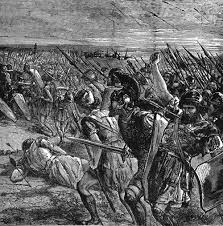
2011 marks the 2500th anniversary of the Battle of Marathon, perhaps the most decisive event in the struggle between the Greeks and the Persians, and also a defining event for Western civilization. Available this week in paperback, MARATHON is the riveting history of the famed battle by Columbia University professor Richard A. Billows. We have Richard with us today on the blog to answer a few questions about his most recent book.

OP: The legend of the Greek messenger running twenty-six miles from Marathon to Athens with news of victory in battle is the inspiration for our modern-day race. Sources suggest that in reality, the entire Greek army marched this distance to defend Athens. Why does this popular myth persist in spite of its historical inaccuracy?

RB: The legend of the lone runner who announces momentous news and dies of exhaustion is very romantic. It was considered extremely romantic in antiquity already, which is why Roman era writers like Plutarch and Lucian told the story. But for modern city marathons, the speed march of the whole Athenian army, which is what really happened, actually offers a much better inspiration!

OP: What led you to become a historian of Ancient Greek and Roman culture?

RB: I've always found the creation of a single, Mediterranean-wide culture and state system to be a fascinating achievement, well worth trying to understand and explain. The way the Greeks and Romans brought this about, and kept it going for centuries, is one of the great achievements in human history. And then too, the stories, the plays, the histories and philosophies and other writings of the ancient Greeks in particular, are so entertaining and just plain interesting.

OP: What is it about the Battle of Marathon that interested you enough to write an entire book about its history?

RB: What is extraordinary and gripping about the battle of Marathon is the huge disparity between the two sides: the vast and immensely powerful and wealthy Persian Empire on one side, the tiny and poor city-state of the Athenians on the other. The sheer daring of the Athenians in standing up to the might of the Persians is remarkable. That they won, and preserved their democracy, their culture, the future of Greek civilization has always seemed little short of miraculous.

OP: Movies and television shows depicting loose interpretations of ancient history are very popular these days. Are you a fan? Will you be watching Immortals when it comes to theaters this month?

RB: I am a big fan of movies and tv shows about ancient Greece and Rome. Spartacus is one of the great films of modern times, I loved Gladiator, and 300 was hugely entertaining. And the HBO series Rome was wonderful, as was the old BBC series I Claudius, for example. I'm not too sure about Immortals: it looks to be less historical than most. But I'll probably ending up watching it and enjoying it.

OP: If you could eat dinner with one figure from Greek or Roman history, who would it be and why?

RB: I'd probably have to choose Julius Caesar. He wasn't just a great politician, or a great general, or a great writer: he was all three! That makes him almost unique in human history, I dare say, and it'd be endlessly fascinating to have a chance to talk to him about how he achieved such stunning success in such different fields of activity. And to top it off, he was also well known as a man of captivating charm and affability, so the evening would be sure to be a success.

Friday, October 29, 2010

Good luck to everyone running the Marine Corps Marathon


Good luck to everyone running the Marine Corps Marathon this weekend! Hopefully you already picked up your copy of MARATHON: THE BATTLE THAT CHANGED WESTERN CIVILIZATION, so you know exactly why you're running 26.2 miles (and can think to yourself around Mile 22 how glad you are not to be running in armor with people trying to kill you at the finish line).


Great job on this impressive accomplishment! Run hard and stay healthy!

Wednesday, September 15, 2010

Running (or cheering at) a marathon this year?

Then know your history. Runner's World takes a break from advising on training plans, shoes, hydration techniques and general running-cheerleading to look at why people run the specific 26.2 mile distance. Below, their article, which draws on MARATHON: HOW ONE BATTLED CHANGED WESTERN CIVILIZATION, by Professor Richard Billows.

Read the article in its entirety here!

When Was the Battle of Marathon?

On or around August 11th, 490 B.C.E., 2,500 years ago. Experts have chosen the 11th after consulting historical lunar calendars. Fellow Greek city state Sparta would have contributed troops to the fight, but for religious reasons couldn’t march until the next full moon, which would have been several days later in mid-August. Previous estimates put the battle in early September.

Did Pheidippides Exist? Did He Run Anywhere?

Most likely yes, on both counts. Ancient Greek historian Herodotus, who wrote the definitive account of the battle some 40 or 50 years after it took place, says that a messenger named Pheidippides ran from Athens to Sparta, asked for help, then ran back with the bad news. That’s a round trip of close to 280 miles over mountainous terrain, and it took him four or five days. Greek messengers routinely ran similar distances for similar reasons. That’s how information generally traveled among Greek city states, says Richard Billows, a professor of Greek and Roman history at Columbia University in New York and author of Marathon: The Battle That Changed Western Civilization.

Did Pheidippides Die?

Well, sure—all of us do eventually—but there’s nothing in the historical record to suggest that Pheidippides died upon completing his Athens/Sparta run, or any other run.

Did Anybody Run from Marathon to Athens?

Yes, but a messenger would have taken a horse. The road between the cities was smooth, and a horse would have been faster and more efficient. The trip from Athens to Sparta, by contrast, was too treacherous for horses, which is why Pheidippides most likely went by foot. That means that the famous scene, whereby a messenger announces victory and collapses, is almost certainly fictional.

Billows, however, believes that thousands of Athenian soldiers were forced to march double time to Athens from Marathon after vanquishing the Persian invaders. During the battle, Athens was left largely undefended, and Billows suspects that Persian war ships were en route to the city and looking for trouble. If true, that means that the first marathon—thousands of people hustling for 25 miles—may have taken place following the Battle of Marathon after all. Just not the way we imagined it.

While this might not motivate you to go run 26.2 miles (which we don't recommend without months of training anyways!) it's interesting to see how events 2,500 years ago still affect both our culture and our traditions today.

Thanks, Runner's World!

Wednesday, September 08, 2010

Did you miss Richard Billows discussing MARATHON on NPR?


Never fear! Here's a handy link to both his interview (with a transcript!) and an excerpt of the professor's wonderful book MARATHON: HOW ONE BATTLE CHANGED WESTERN CIVILIZATION.

Our favorite part of the interview with Guy Raz actually occurs right at the beginning, and is a great summary of why the Battle of Marathon is so crucially important to our civilization, besides giving us 26.2 mile runs.

RAZ: Aeschylus was a veteran of the legendary battle at Marathon. It happened exactly 2,500 years ago, and it pitted a heavily outnumbered band of mainly Athenians against the far mightier Persian army. It also lent its name to the famous race, which we'll hear about in a moment.

Historian Richard Billows writes about the battle in a new book called "Marathon." And he says that that one day in 490 BC actually changed the course of Western civilization.

Mr. BILLOWS: What we can tell from the way the Persians treated other cities -Greek cities that they attacked in this same period is that if the Athenians had lost the battle, the city of Athens would have been destroyed. The Athenian citizen population rounded up, put on ships and transported to Persia to be interviewed by the Persian king, Darius, at that time and then probably resettled somewhere near the Persian Gulf where they would've been lost to history.

And as a result, all those great Athenians of the fifth and fourth centuries -the likes of Thucydides and Socrates and Plato, one could go on - simply would never either have been born or their works would never have been written and would not have been able therefore to shape subsequent classical Greek civilization and Western culture as we know it.

RAZ: I mean, you say that had the Persians defeated the Athenians at Marathon, democracy would never have flourished.

Mr. BILLOWS: The first democracy that we know of in world history was created by the Athenians just 15 years before the battle of Marathon. It was established as a result of a kind of coup d'etat against a tyrant who had been ruling Athens. And that democracy was a very young and new experiment when the Athenians faced the Persians.

We also love how Mr. Raz chose to end the interview.

RAZ: I'm curious. You emphasize the importance of democracy in the Athenian victory. Why?

Mr. BILLOWS: The way that the Greeks fought was very egalitarian. Every individual soldier fought at his own expense. He paid for his own equipment and for his own upkeep. And essentially voluntarily, they were participating members of the social and political community. They felt that this community, because the democratic system, was theirs, they governed themselves very directly.

We tend to make a distinction between the government and the people. There was no such distinction in Athenian democracy because the people were the government. It was that sense of this is ours - this community, this political state that we've created is our thing.

So, the Greek victories over the Persians were intimately tied up with the political system of participatory democracy that the Greeks had created.

Fascinated yet? Make sure to listen to (or read!) the entire interview. And stay tuned for more reviews, events and interviews with Professor Billows as the marathon race season gears up!